The first week of my Churchill Fellowship brought me more than I ever could have hoped for. I had the opportunity to meet some inspirational people – bereaved mums, volunteer doulas and breastfeeding peer supporters from Goodwin Doulas and Breastfeeding Peer Support, the incredible staff at Goodwin Development Trust, midwives and social workers, and representatives from Hull City Council and East Riding of Yorkshire Council.

From sharing personal stories and experiences, to teaching me about running a volunteer doula program and giving me copies of relevant documents and resources, there was no end to the kindness and generosity of the people from Hull. Even if my Fellowship stopped right now, I would still have learnt so much from this experience. (Please don’t stop right now).
Above all, I was really struck by what a sense of community there is in Hull; a sense that there is more to be found in life by helping your neighbour than in helping yourself. This embodies the ethos of the Goodwin Volunteer Doula Project, and it was such a privilege to see this kindness and community in action during the week.
Somewhat naively, I had not imagined that I might have an impact to change the provision of care during pregnancy loss in other countries. The Goodwin Volunteer Doula Project is now considering how they might be able to provide support during pregnancy loss as a specific part of their doula offerings. I truly hope this can be achieved, and the families of Hull can be helped even further by this really special program.
In addition to meeting people from overseas and learning new things, the Churchill Fellowship also encourages travel and exploration generally. Given I was in the UK, I took the opportunity to travel to London for a few days to see some Churchill-related sites with some friends.
None of this opportunity would have been possible without Churchill, so it was important to me to pay tribute to him.
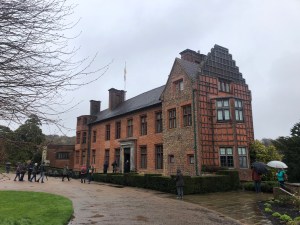
My first Churchill tribute trip was via the train from London to Oxted, where my childhood friend Georgie kindly met me and we drove to Chartwell. Chartwell was purchased by Churchill and his wife Clementine in 1922, and was much loved by the family. Churchill himself said that “a day away from Chartwell is a day wasted”. The home was donated to the National Trust following Churchill’s death.
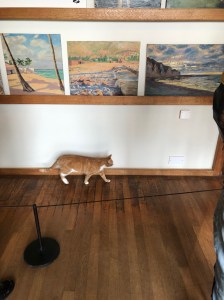
When the family donated the home, they stipulated that there must always be “a marmalade cat named Jock, with a white bib and four white socks, in comfortable residence at Chartwell”. I felt lucky to see Jock VII on the day we visited, clearly living very comfortably indeed!
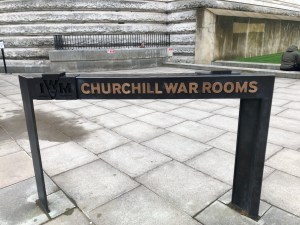
My next Churchill tribute was visiting the Churchill War Rooms with my friend Kat. This is a fascinating museum. The War Rooms were the secret underground headquarters for the British War Cabinet and the core government activities throughout World War II. The rooms were locked on 16 August 1945 and left undisturbed. Knowledge of and access to the site remained highly restricted until the late 1970s, and the rooms were not opened to the public until 1984. The war was truly won from these rooms – this is definitely worth a visit if you are in London.
Overall, I was struck by how prolific Churchill’s life was, in so many ways. He built most of the extremely long and tall brick walls at Chartwell. He painted more than 500 finished canvasses, many of which were painted at overseas locations in a time when travel was not as fast or easy as it is now. He wrote 43 book-length works in 72 volumes. His passion, commitment and output alone are inspiring.


I don’t agree with all of Churchill’s philosophies (his racist views are particularly repugnant), but I think he was very human – complex, capable of showing great humanity and humility, and also a keen learner. I think a modern Churchill would hold remarkably different views about many things, including race.
For example, following the Dardanelles failure, Churchill resigned his post as First Lord of the Admiralty, then went to fight on the Western Front. This shows enormous humility, accountability to his fellow man and a desire to learn more and become better through experience.
Churchill also believed in us making the world better for those who come after us. He knew that the world doesn’t stay the same; it changes because we as people change – and education, travel and experience are key inspirations for that change. I remain so grateful for this opportunity to learn, travel and experience different cultures and thinking, and hopeful this will combine to help me create change.

 Karen Schlage